What is shown
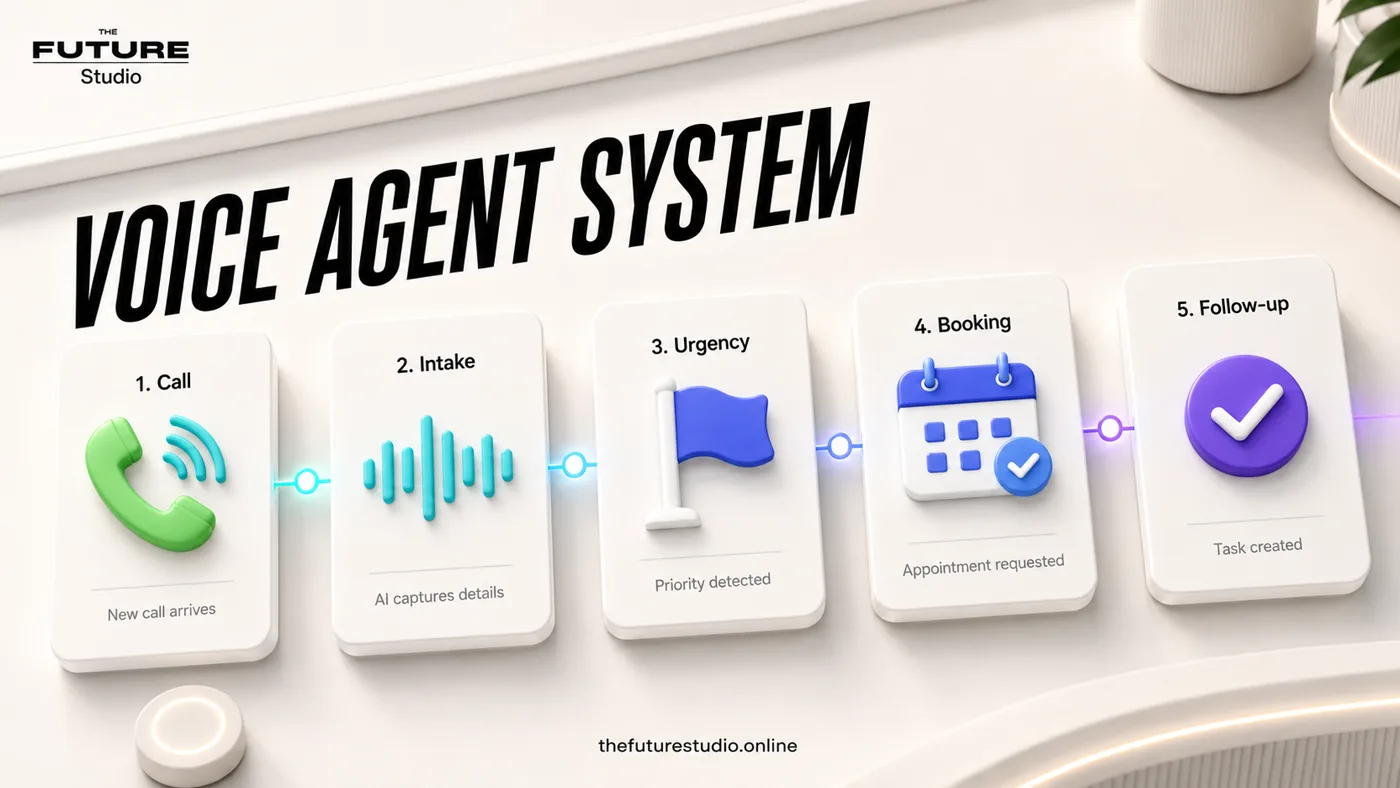
The page demonstrates the approved flow from unanswered call to captured context, escalation, and an owned callback task.
missed-call recovery
A missed-call recovery workflow turns an unanswered call into a clear next step. The system captures the request, asks only the details needed for follow-up, flags urgent or sensitive language, and gives staff a summary they can act on.
Illustrative workflow
Prepared example for reviewing the process. This is not a client result.
Recover the inquiry without asking AI to make clinical or high-risk decisions.
Example staff record
Callback log: missed call time; contact; assigned receptionist; attempt count; result; next action.
A missed call is recovered only under the clinic's defined outcome, not because a message was sent.
It proves that AI automation is useful when it is narrow and operational. The goal is not to replace the front desk. The goal is to prevent an unanswered call from becoming a lost appointment, quote request, or customer conversation.
Evidence status
The page demonstrates the approved flow from unanswered call to captured context, escalation, and an owned callback task.
This is a workflow proof asset, not a published client result. It does not claim a conversion lift, revenue result, or operating outcome without verified client evidence.
Call routing, urgent-language handling, callback ownership, calendar rules, and staff notifications must be tested with the real team.
Missed calls captured, callback time, tasks completed, qualified conversations, and appointments or quotes recovered.
FAQ
Name, phone number, reason for calling, preferred callback time, language preference, and any simple routing category the team has approved.
Measure missed calls captured, callback tasks created, response time, appointments recovered, and staff handoffs. Do not measure success only by automated messages sent.
Yes. Customer-facing automation should be transparent and should always offer a path to a person when needed.
Yes, when the clinic has approved booking rules. Some appointment types can be routed automatically, while sensitive or unclear requests should be reviewed by staff.
The customer asks for a person or the request exceeds the approved flow. Prepare the transcript or concise summary, the customer's question, captured fields and the reason automation is handing over. Assign a person or queue and pause automated replies. If nobody is available, provide the approved expectation and retain the unresolved task. A transfer is not complete until responsibility is accepted or a visible fallback owns the task.
Calls, chat messages and web forms reach different people. Collect the source channel, administrative request and preferred reply route. Link matching enquiries only when identity is sufficiently clear. Send appointment requests to the scheduling owner and unresolved or sensitive questions to the designated staff queue. A unified queue must not expose clinical notes to people who do not need them.
Next step
Book a free AI systems demo and we will map where calls are missed, what the AI should collect, and when staff should take over.