ai receptionist for clinics
AI Receptionist for Clinics
An AI receptionist for clinics helps the front desk capture missed calls, reply to WhatsApp messages, collect appointment details, send reminders, handle reschedules, and hand urgent or sensitive issues to staff. It is built for administrative work, not clinical judgment. The safest clinic systems give patients a faster first step while keeping diagnosis, therapy advice, emergencies, and regulated decisions with trained people.
Booking intent
Turn missed calls and appointment requests into cleaner bookings
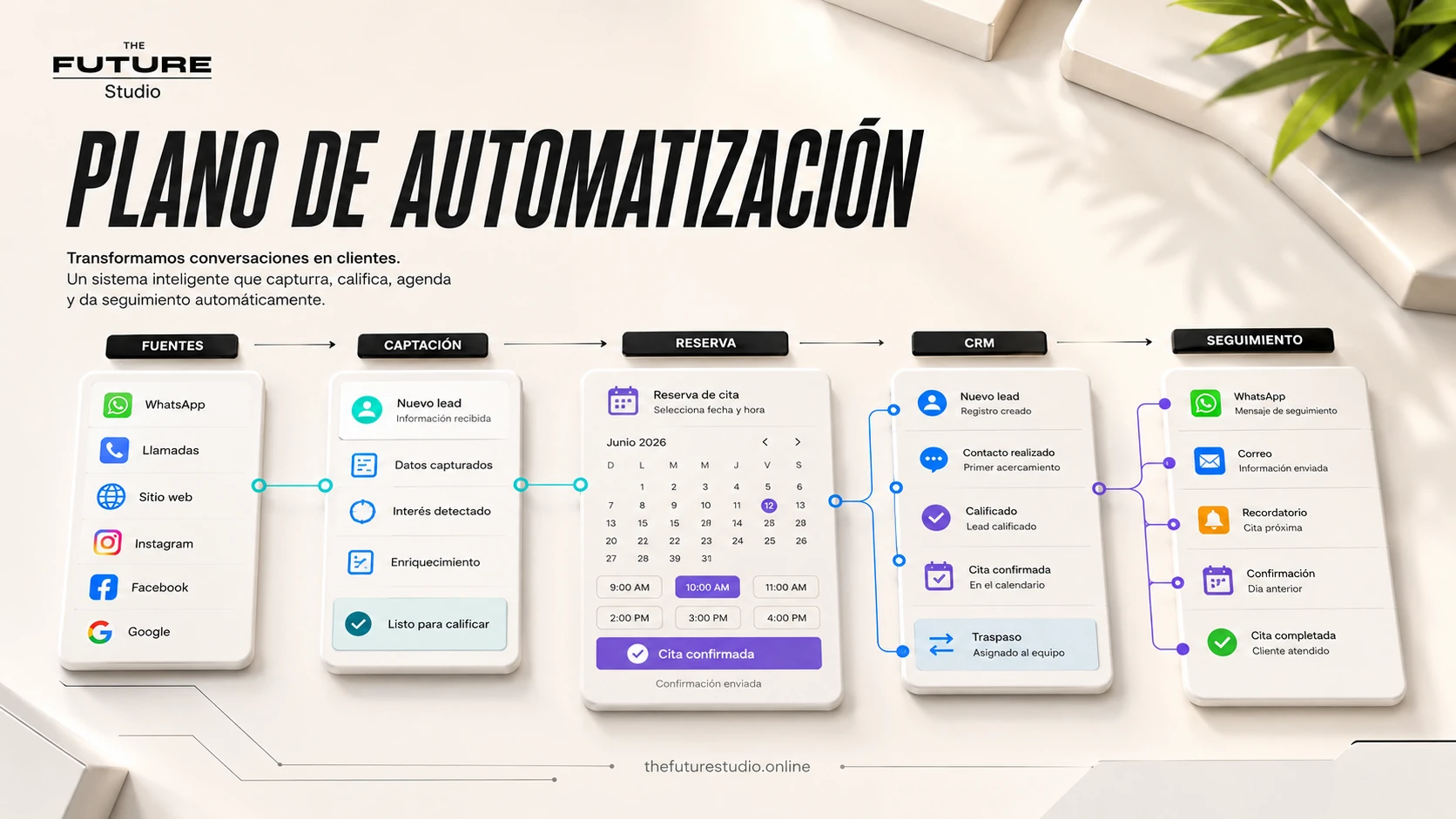
Google is already showing this page for clinic receptionist and booking searches. The page now gives that visitor a clearer answer: the system is for appointment booking, missed-call capture, reminders, reschedules, intake, and safe staff handoff.
A clinic booking agent should collect only practical scheduling details: name, contact method, appointment type, preferred times, location, and new or returning patient status. Anything urgent, sensitive, or outside the approved script should move to staff with a summary.
This makes the offer easier to understand from the search result and keeps the page focused on the operational problem clinics actually feel: too many appointment requests arriving while the front desk is busy.
Clinic safety
When the workflow should hand off to staff
A clinic receptionist workflow should make the first response faster without acting beyond its role. Appointment requests, reminders, reschedules, location details, and routine intake can be automated. Urgent symptoms, sensitive clinical questions, unclear cases, and exception requests should move to staff quickly with the right context attached.
That usually means approved scripts, visible escalation rules, and a clear after-hours path. The system can capture the request, share approved next steps, and queue a staff review, but it should not diagnose, interpret urgency, or make promises outside clinic policy.
Visitor path
Clinic receptionist and booking paths
Give clinic visitors a direct path to the booking system, voice-agent system, WhatsApp workflow, or broader AI services hub.
Worked example
A reception shift with visible ownership
Illustrative workflow to review with your team; not a client result.
From request to action
- TriggerReception opens with overnight requests and receives new calls during the day.
- Required informationAt opening, assign overnight callbacks. During the shift, route new bookings, confirmations and changes. Before closing, review unanswered requests.
- Rule and ownerKeep the booking owner and unresolved-case owner visible. Confirm a booking only when the appointment source returns a successful confirmation.
Example record
Shift review: overnight callbacks; new requests; changes pending; confirmed bookings; unresolved cases with an owner.
A receptionist workflow handles administration; staff make clinical and urgent-care decisions.
Support the front desk
The safest clinic systems handle administrative booking steps while keeping clinical judgment and sensitive decisions with people.
Context
Why Clinic Front Desks Get Overloaded
Clinic communication is rarely simple.
A dental clinic may receive calls about cleanings, emergencies, insurance, pricing, reschedules, and directions. A therapy clinic may receive sensitive new client inquiries, appointment changes, practitioner requests, and questions about availability. A med spa may receive consultation requests, treatment questions, post-visit concerns, and booking requests from social media.
At the same time, many clinics receive messages through several channels: phone, WhatsApp, website forms, Instagram, email, and walk-ins. If the clinic serves both English- and Spanish-speaking clients, the workload increases again.
The problem is not that staff are slow. The problem is that too many small tasks depend on manual attention.
Clinic appointment automation helps by taking routine steps off the front desk while leaving sensitive decisions with humans.
Workflow
What an AI Receptionist for Clinics Can Help With
An AI receptionist can support the administrative side of clinic communication.
It can answer basic questions about hours, location, parking, appointment types, accepted booking steps, preparation instructions, and cancellation policies. It can collect appointment requests, ask whether someone is a new or returning patient, confirm preferred times, and send reminders.
It can also help route requests. A new appointment inquiry is different from a billing question, a post-treatment concern, a complaint, or an urgent clinical issue. The system should identify the category and guide the next step.
For many clinics, the most useful features are simple:
- First response to calls, WhatsApp messages, or website inquiries
- Appointment request collection
- Booking links or calendar support
- Reschedule requests
- Reminders and confirmations
- Intake questions
- Internal summaries
- Staff alerts
- Human handoff
- Bilingual English and Spanish communication
The system should be calm, clear, and limited. It should sound like your clinic, not like a generic chatbot.
Workflow
AI Booking Agent for Clinics
An ai booking agent for clinics focuses on scheduling.
It can collect the appointment type, preferred practitioner, preferred location, preferred time, and contact details. It can also ask whether the person is a new or returning patient and whether they need staff to call them back.
Some clinics may allow the agent to book directly into a calendar. Others may prefer a request-and-confirm model where staff approve the appointment before it is final.
That distinction matters. A simple wellness appointment may be easy to schedule automatically. A therapy intake, dental emergency, specialized consultation, or post-procedure concern may need human review.
The best booking workflows are built around the clinic's real rules. Which appointment types can be self-booked? Which require approval? Which practitioners accept new clients? Which services require forms before confirmation? Which requests should be escalated immediately?
Workflow
What Must Stay Human
The most important part of clinic AI automation is knowing what not to automate.
AI should not diagnose symptoms, recommend treatment, provide therapy guidance, assess medical urgency, interpret clinical information, or replace licensed professionals.
It should also avoid giving guarantees about outcomes, suitability, pricing exceptions, insurance coverage, or practitioner decisions unless the wording has been approved and is safe for the clinic.
A good AI receptionist can say, “I can help collect your appointment request and send it to the team.” It should not say, “This treatment is right for you.”
It can ask, “Would you like the clinic to contact you about this concern?” It should not evaluate the concern.
It can provide approved emergency instructions if the clinic has written them. It should not improvise when a patient describes urgent symptoms, distress, or risk.
Workflow
Therapy, Dental, and Med Spa Examples
Therapy clinics
An ai receptionist for therapy clinics can collect new client inquiries, availability, preferred therapist type, contact details, and consent for follow-up. It can explain administrative steps, fees if approved, and how the intake process works.
Sensitive mental health content should be routed carefully. If a person describes urgent distress or safety concerns, the system should follow approved escalation instructions rather than continue ordinary booking.
Dental clinics
Dental clinic booking automation can help with cleaning requests, new patient appointments, reschedules, directions, reminders, and routine administrative FAQs.
For pain, injury, swelling, bleeding, or urgent concerns, the system should gather basic contact information and escalate based on the clinic's rules. It should not provide diagnosis or treatment advice.
Med spas
Med spa booking automation can collect consultation requests, service interest, preferred dates, and contact details. It can provide approved preparation instructions and booking policies.
Questions about suitability, contraindications, recovery, or risks should go to trained staff. AI can help route the question, not answer beyond approved educational or administrative language.
Wellness clinics
Wellness and healthcare-adjacent businesses can use AI for booking, reminders, class or appointment information, intake forms, and follow-up instructions. The workflow should still separate administrative help from professional advice.
Workflow
Bilingual Communication and Panama Relevance
For clinics in Panama, bilingual communication can be a major operational benefit. Many clinics serve Spanish-speaking local patients, English-speaking expats, medical tourists, and international residents.
An ai receptionist Panama workflow can support English and Spanish without asking the front desk to manually translate every message. It can respond through WhatsApp, voice, website chat, or forms depending on the clinic's setup.
This is especially useful when patients ask simple but important questions: where the clinic is located, what documents to bring, how to confirm an appointment, whether a slot is available, or what the next step is.
Panama's connected market makes digital communication important for local service providers. DataReportal reported 3.60 million internet users in Panama at the end of 2025, which supports the broader shift toward digital-first communication channels for local businesses.
Workflow
What a Good Clinic AI Receptionist System Includes
A serious clinic implementation should include more than a chatbot.
It should begin with front desk workflow mapping. The clinic needs to identify the most common request types, the most common delays, the most repeated questions, and the points where staff need better information.
Then the system needs approved scripts. These should cover greetings, FAQs, appointment requests, preparation instructions, cancellation rules, reminders, handoff language, and bilingual responses.
It also needs escalation logic. The AI should know when to stop, when to transfer, when to create a staff task, and when to provide approved urgent-care instructions.
Calendar or booking integration should be planned carefully. Not every appointment type should be available for automatic booking. The system should respect practitioner schedules, service types, buffers, location rules, and approval steps.
Reporting should also be included. Clinic leaders should see how many inquiries came in, how many appointment requests were captured, how many required human handoff, and where patients dropped off.
Workflow
Risks and Mistakes to Avoid
The first risk is confusing administrative automation with clinical care. AI can support intake and booking, but clinical judgment belongs to trained professionals.
The second risk is vague, generic responses. Clinic communication needs clarity. Patients should know what information is needed, what happens next, and when a person will follow up.
The third risk is poor handoff. If the AI collects information but staff do not receive a clear summary, the clinic has only moved the bottleneck.
The fourth risk is overbooking or incorrect scheduling. Booking rules should be tested carefully before launch.
The fifth risk is collecting too much sensitive information. Intake should be limited to what the clinic actually needs and can handle appropriately.
Workflow
How The Future Studio Approaches Clinic AI Receptionist Systems
The Future Studio builds clinic AI systems around real front desk operations.
We start by mapping the patient or client journey: how inquiries arrive, what staff ask, how appointments are booked, where delays happen, and which conversations need human attention.
Then we design the AI receptionist or booking agent around approved clinic rules. That may include voice agents, WhatsApp automation, website AI assistants, booking flows, lead pipeline automation, reminders, internal summaries, dashboards, and team training.
For clinics in Panama and international service markets, we can also support bilingual workflows, especially where English and Spanish communication is part of daily operations.
The result is not a generic bot. It is a practical front desk support system that helps staff respond faster, collect better information, and keep sensitive work in human hands.
What does an AI receptionist for a clinic do?
An AI receptionist for clinics is an administrative support system for appointment requests, basic intake, reminders, and routing. It can help capture requests from phone calls, WhatsApp, forms, or website chat while clinical decisions and sensitive issues remain with trained staff.
Good clinic use cases
- Collecting name, contact details, reason for visit, and preferred times.
- Sending booking links, reminders, confirmations, and reschedule prompts.
- Routing urgent, sensitive, or clinical language to staff.
- Summarizing inquiries before the front desk takes over.
Important limits
- It should not diagnose symptoms or provide medical advice.
- It should not replace emergency instructions or clinical judgment.
- It should use approved clinic language and escalation rules.
- It should be measured by bookings, response time, handoff quality, and staff time saved.
FAQ
Common questions
What is an AI receptionist for clinics?
An AI receptionist for clinics is an administrative support system for appointment requests, basic intake, reminders, and routing. It can help capture requests from phone calls, WhatsApp, forms, or website chat while clinical decisions and sensitive issues remain with trained staff.
Can an AI receptionist book clinic appointments?
Yes, if the workflow is designed safely. Some appointments can be booked automatically, while others should be sent to staff for approval before confirmation.
What is an AI appointment booking agent for clinics?
It is an administrative automation system that can answer appointment requests, collect basic booking details, offer approved next steps, send reminders, and route exceptions to clinic staff.
Can an AI booking agent help with missed clinic calls?
Yes. It can capture missed-call requests, follow up by SMS or WhatsApp, collect preferred appointment times, and notify staff when a person needs to review the request.
Is an AI receptionist safe for therapy clinics?
It can be safe when used for administrative support and built with strict escalation rules. It should not provide therapy, assess risk, or replace licensed professionals.
Can AI handle dental clinic booking automation?
Yes. AI can support cleaning requests, new patient bookings, reminders, reschedules, and directions. Urgent dental concerns should be routed according to the clinic's approved process.
Can the AI receptionist work on WhatsApp and phone calls?
Yes. A clinic system can include WhatsApp automation, an AI voice agent, website chat, booking forms, and internal notifications depending on the clinic's needs.
What information should a clinic AI receptionist collect?
It should collect only the information needed for administrative next steps, such as name, contact details, appointment type, preferred time, location, and new or returning patient status. Sensitive information should be handled carefully and only when necessary.
Related pages
Explore related AI systems
Receptionist guides
Read focused AI receptionist pages
Next step
Map the first workflow before you build
Book a free AI systems demo with The Future Studio. We will map your clinic's front desk workflow and identify the first AI receptionist or booking automation that can reduce admin pressure while keeping patient care human.