What is shown
The page demonstrates how a message can become structured intake, a routing decision, and a human handoff with context.
whatsapp lead intake
A WhatsApp lead intake workflow helps a service business respond quickly without turning the conversation into a robotic menu. The system asks the right few questions, records the lead, and moves the chat to a person when judgment or approval is needed.
Illustrative workflow
Prepared example for reviewing the process. This is not a client result.
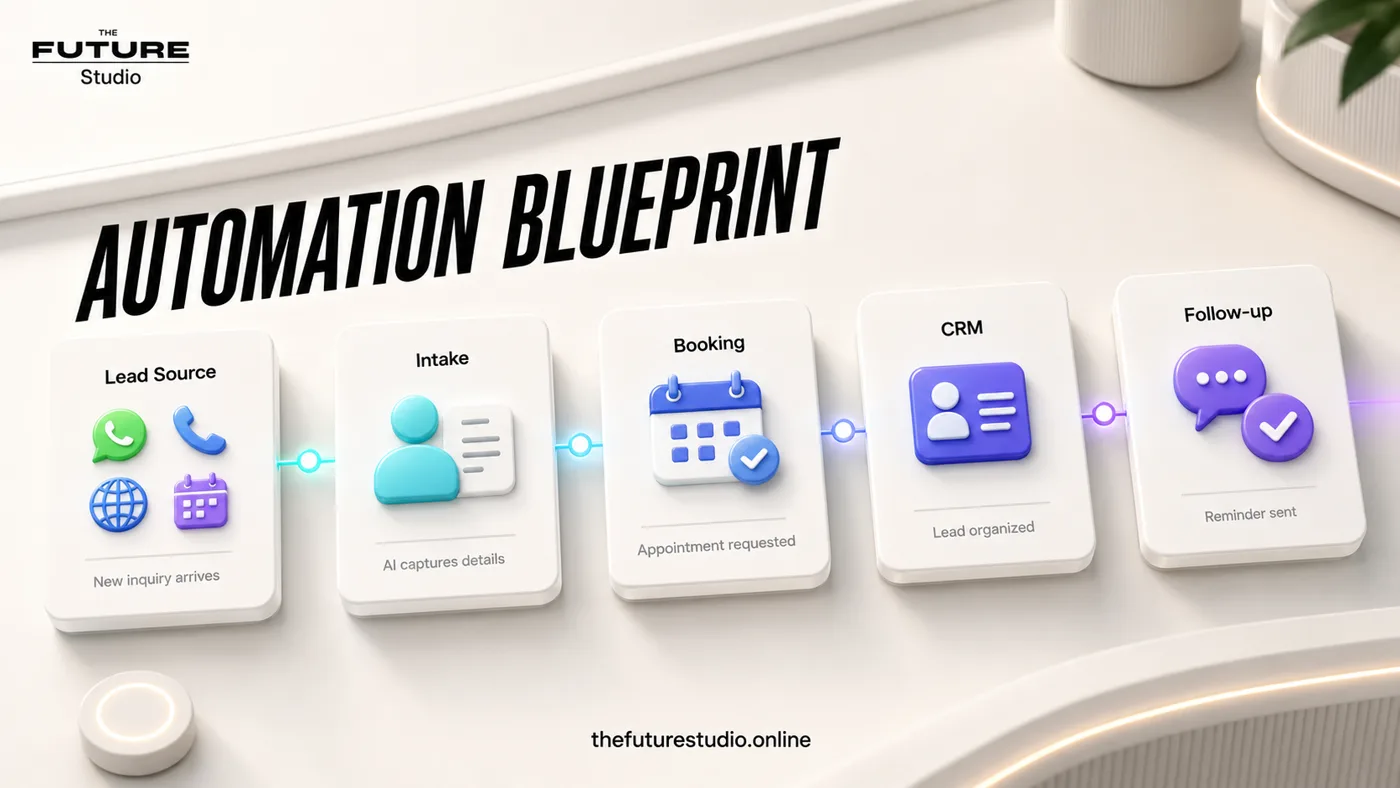
Lead intake should qualify the request and prepare the next action, not trap customers in automation.
Example staff record
Handoff: trigger; summary; assigned owner; bot paused; staff reply pending; customer informed; closure state.
A transfer is not complete until responsibility is accepted or a visible fallback owns the task.
It proves that the highest-value first automation is often the beginning of the conversation: reply fast, collect enough detail, route the lead, and preserve the customer context so a human can continue without starting over.
Evidence status
The page demonstrates how a message can become structured intake, a routing decision, and a human handoff with context.
This is a workflow proof asset, not a published client result. It does not claim a conversion lift, revenue result, or operating outcome without verified client evidence.
Approved questions, opt-out handling, response boundaries, ownership rules, CRM fields, and handoff timing must be tested with real conversations.
First-response time, completed intake, qualified handoffs, unowned enquiries, bookings, and follow-up completion.
FAQ
Yes. Customer-facing automation should be transparent and should always offer a path to a person when needed.
Measure first-response time, qualified leads, booked calls, staff handoffs, follow-up completion, and conversations that would otherwise have been lost.
Next step
Book a free AI systems demo and we will map the first WhatsApp workflow your team can safely automate.