Recognise the signal
Buying intent, frustration, risk, or an explicit request for a person.
Free WhatsApp AI handoff test
Run 10 realistic customer conversations through your current WhatsApp process. Find the moments where automation should stop, a person should take ownership, and revenue is most likely to disappear.
Interactive WhatsApp assessment
Use the quick review if you know how the process works. Use live verification by sending each message through the real system or asking a vendor to demonstrate it. Do not enter real customer information.
Recognise the request for a person?
Stop automation and preserve context?
Assign an owner with a response deadline?
Choose one answer for each control to see the sample result.
Answers stay in this browser.
These three answers personalise the recommendations. They do not change your reliability score.
Privacy: selections are stored locally in this browser so you can continue later. The assessment does not send answers, customer messages, or personal data to The Future Studio.
Reliability score
This is a structured operational assessment, not a certification, legal opinion, security audit, or industry benchmark. Validate critical controls in the real deployment context.
A real handoff, not a promise
A chatbot saying “someone will contact you” is not a reliable handoff. The test checks whether responsibility, context, and recovery are actually visible.
Buying intent, frustration, risk, or an explicit request for a person.
The AI stops improvising once the boundary has been reached.
The customer does not need to repeat their story to the team.
A named person or queue becomes visibly responsible.
A timer, fallback route, or escalation prevents silent failure.
10 realistic WhatsApp conversations
The assessment covers commercial, operational, and safety boundaries—plus bilingual handoffs for teams working across English and Spanish.
High intent needs immediate ownership.
An explicit human request tests control.
Frustration must stop automated loops.
Payment or personal data tests safety.
Expectations and next response stay clear.
Language changes must preserve intent.
The lead should not restart from zero.
Correction and escape routes are tested.
High-value exceptions reach the right owner.
Recovery prevents a silent dead end.
The CLEAR Handoff Framework
The workflow shows how a customer message becomes a controlled, owned next action. The five checks turn the framework into an operational standard people can apply and reference.
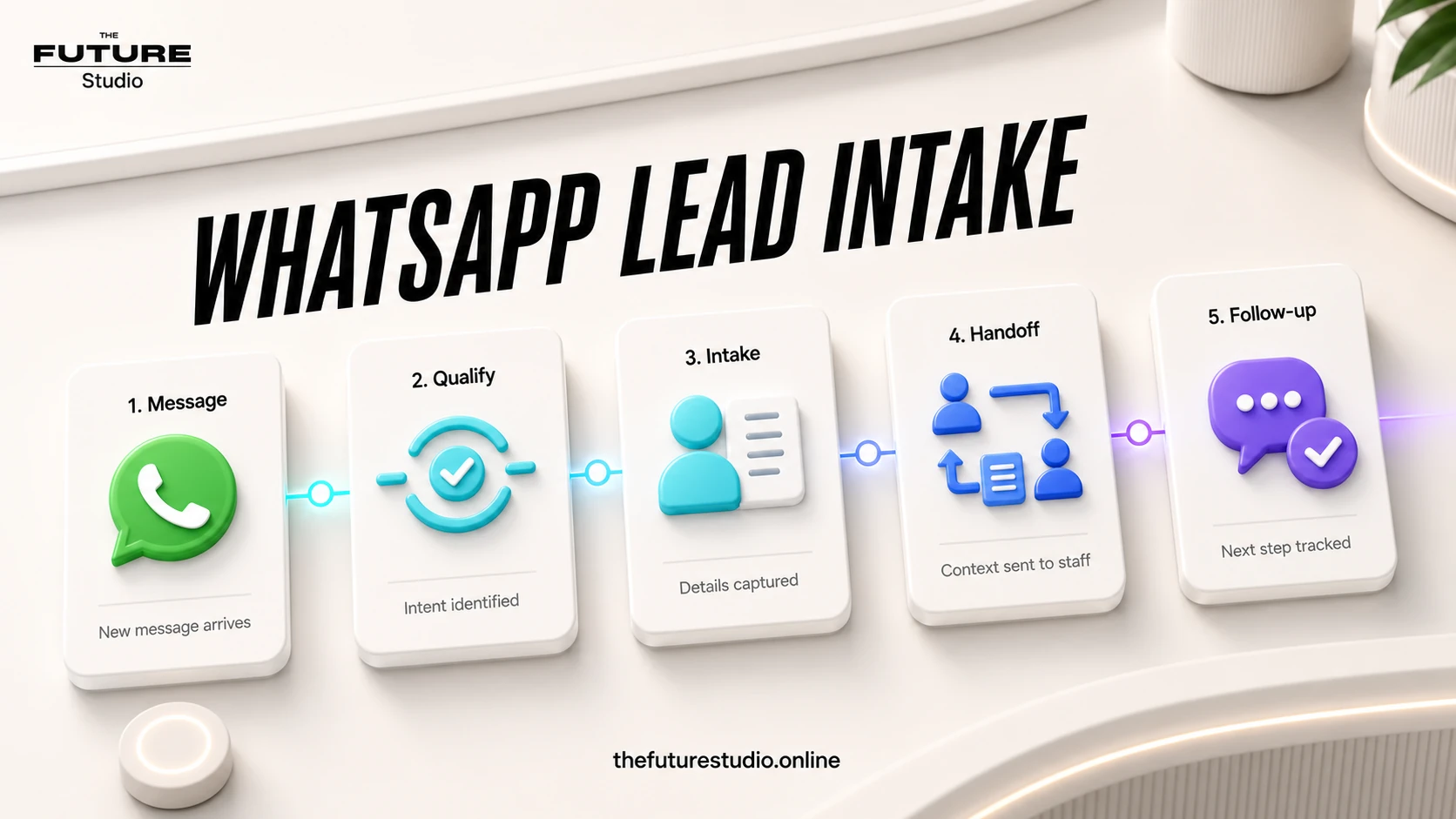
Detect intent, urgency, or risk.
Stop before the AI causes harm.
Carry the conversation forward.
Name the person or team responsible.
Escalate when the first route fails.
When a WhatsApp conversation goes to a person, I would want to see what they actually receive. Can they see why it was passed to them, what the customer has already said and what they need to do next?
Try a few situations your team could recognise: a routine question, a request that needs a person's judgment, a message with missing details, an after-hours enquiry and a conversation nobody picks up. Follow each one through the process. Check what caused the handoff, where it went, what the summary included and who was expected to respond.
Then check what happens when that person takes over. The automation should pause, and the conversation history should be available. If nobody responds, there should be a clear next action. Staff should also be able to see where the conversation stopped. Ask to see those things working during the test.
Agree the rules with the team. The system can answer approved routine questions and collect the agreed information. Conversations that need judgment, a custom answer or a staff decision go to the appropriate person. Decide who receives them, when the automated replies stop and how unresolved conversations are reviewed.
Start with one handoff the team can use and check. Once that works, use the results to decide what to add. You may find that a summary needs one more detail, a conversation is going to the wrong person or the recovery rule is unclear. Those are specific things you can fix and test again.
Keep reviewing the conversations that remain unresolved. They give the team a practical way to see whether the rules still work and where a person needs better information to finish the job.
Your WhatsApp reliability result
This sample shows how to read a score and its priorities. Your result is calculated after you complete all ten scenarios.
The result is not a vanity score. It identifies the conversations most likely to lose revenue and shows which operational control failed.
Owner notified, but no timer or recovery path exists.
The lead must repeat information after transfer.
No named queue or next-contact time is given.

Turn the result into a fix plan
For businesses that want help, the test leads naturally into a short review call. We confirm the real workflow first, then recommend whether a paid Revenue Recovery Audit is worthwhile.
Who receives the conversation, where, and during which hours?
Fix the scenarios affecting qualified, urgent, or high-value leads first.
Map ownership, evidence, timing, and recovery across the complete process.
Built to be useful and citable
The resource includes a plain-language definition, versioned methodology, and primary sources. This supports human trust, editorial backlinks, and AI citation without pretending the framework is an official WhatsApp standard.
Ten minutes to expose the weak points
Test the ten conversations now. Keep your answers private, save the result, and decide whether the failures are worth fixing.