Design Direction
Brand systems, visual hierarchy, UI/UX, content structure, and a coherent design language that carries across every customer touchpoint.
Explore the design practiceFounder profile
Richard is the founder, designer, and systems builder behind The Future Studio. He combines more than a decade of design and education practice with hands-on work across websites, custom applications, AI agents, automation, and connected client experiences.

Background and perspective
Richard originally trained in the arts and design, including study at University of the Arts London. That foundation shaped how he approaches structure, communication, hierarchy, and complexity. Before The Future Studio, his work moved across visual identity, digital experiences, creative technology, and education.
Today he applies that same thinking to websites, applications, and business operations. The starting point is rarely “Which tool should we add?” It is “What should people understand, what should they be able to do next, and where does the experience or workflow break?”
That combination of design and teaching matters in implementation. A useful digital product must be understandable to the people using it, clear to the clients interacting with it, documented for handover, and adaptable after launch.
What Richard builds
The work brings design judgment and implementation together: the brand and interface people see, the website or app they use, and the operational system working behind it.
Brand systems, visual hierarchy, UI/UX, content structure, and a coherent design language that carries across every customer touchpoint.
Explore the design practiceClear, conversion-focused websites that explain the offer, guide the visitor, capture useful context, and create a visible next step.
View website systemsDashboards, portals, calculators, internal tools, and interfaces designed around a specific business or client workflow.
View custom appsMissed-call recovery, routine call handling, qualification, summaries, routing, and clear human escalation.
View voice systemsFast first response, structured intake, approved message flows, lead routing, and human handoff with context.
View WhatsApp systemsBooking, intake, lead pipelines, follow-up, and ownership rules connected into one practical front-office system.
Start Opportunity Audit
One connected practice
Richard does not treat design, websites, apps, and automation as separate disciplines competing for attention. They are different layers of the same client experience.
The design creates clarity and trust. The website gives the business a useful digital front door. The application turns a specific process into a usable tool. The automation connects what happens next without removing the human decisions that still matter.
Working method
Every engagement starts with the workflow and the business consequence. The tool choice comes after the operating rules are clear.
Trace where enquiries arrive, what the team does next, where context disappears, and which delays affect revenue or client experience.
Set the intake fields, qualification logic, owner, handoff boundary, escalation path, and success measure before automating.
Connect the minimum set of tools needed to make the next step reliable without creating unnecessary operational complexity.
Check routine enquiries, missing data, urgent cases, staff handoff, notifications, failure states, privacy boundaries, and mobile use.
Document the workflow, train the team, review early evidence, and tune the system around observed use rather than assumptions.
Selected work
The named client implementation below is separated from demonstrative workflow evidence. No fictional testimonial or unverified result is presented as client proof.
A bilingual information architecture, website experience, booking intake, digital assistant, voice workflow, and safe staff handoff built for Dr. Carlos A. Brugiati and UroPanama.
View verified case studyA practical model showing how an unanswered call can become a captured enquiry, callback task, owner, and visible next step.
View workflowA structured route from first message through qualification, context collection, team routing, and human follow-up.
View workflow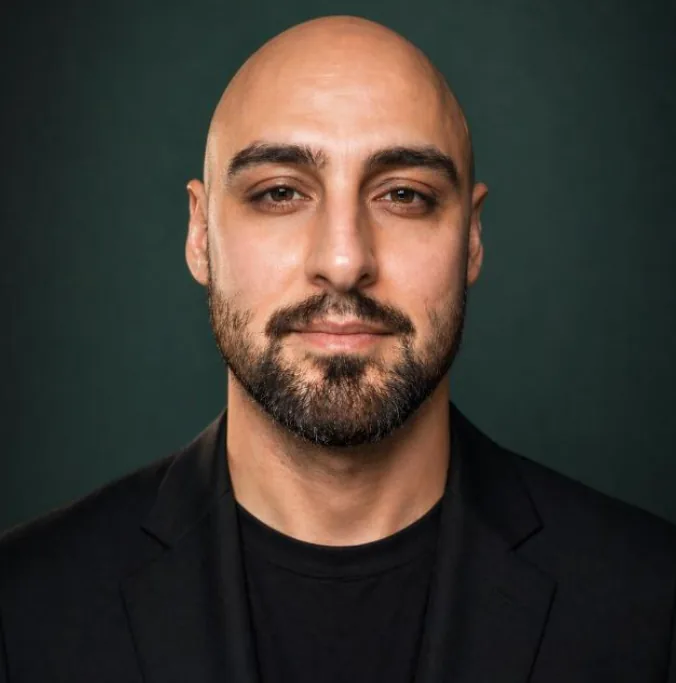
Professional foundation
Richard's work is shaped by a design-led point of view: make the important information visible, reduce unnecessary choices, keep human responsibility clear, and build around the way the team actually operates.
Public authority
Richard leads The Future Studio's systems strategy and implementation work. These public profiles and proof pages connect his design and AI systems background to the company's named work, service pages, and operational methods.
Industry systems
Start with the bottleneck
Bring the missed calls, slow replies, booking friction, scattered follow-up, or manual workflow. Richard will help map the leak and identify the clearest first build.