sales team handoff
WhatsApp AI Human Handoff for Sales Teams
WhatsApp AI human handoff for sales teams helps separate fast first response from high-value human conversations. The AI qualifies, organizes, and routes the lead so sales people spend more time closing and less time chasing basic details.
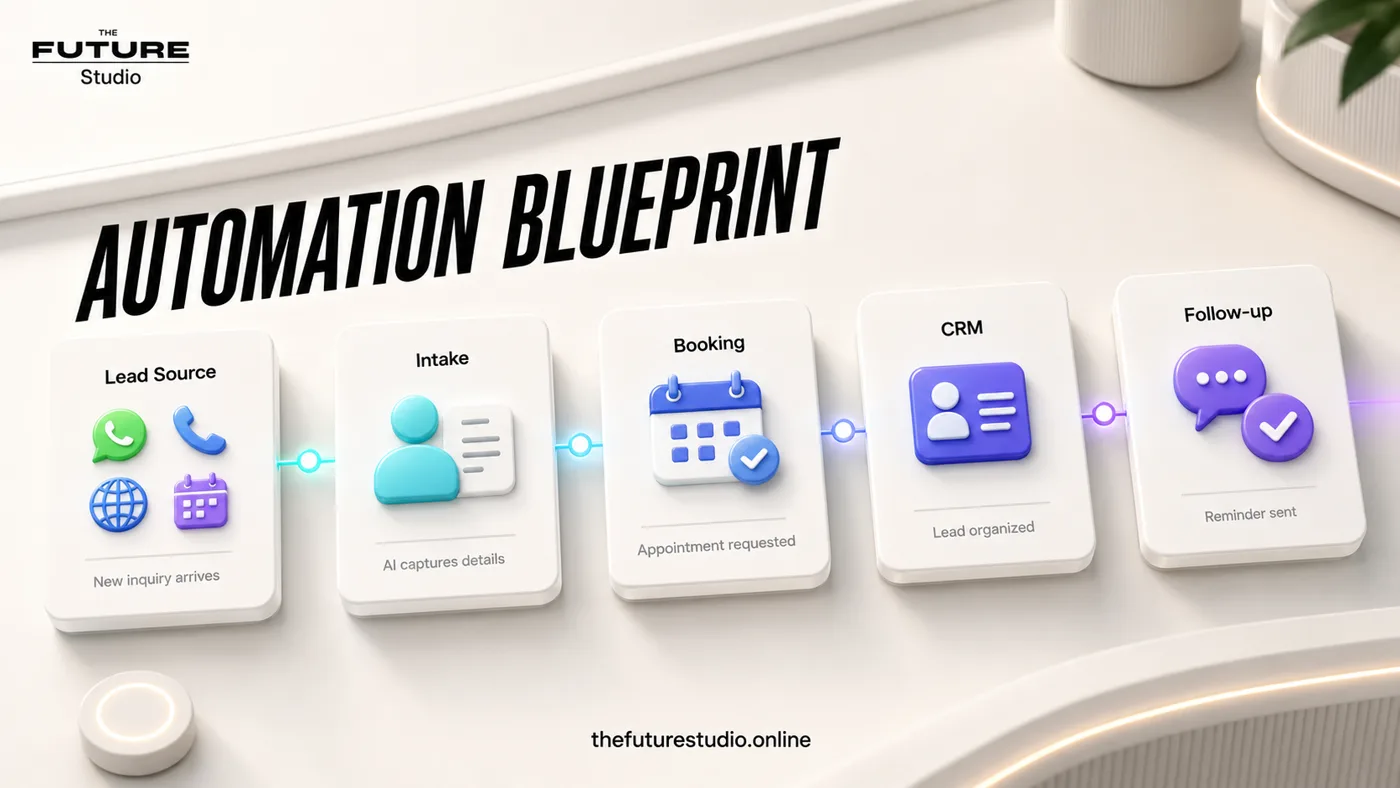
AI starts, humans close
Qualify the lead, update the CRM, and hand off when a person should take over.
Recommended path
Connect this page to the right system
Each page exists for a distinct search intent and should move the visitor toward the right workflow, service page, or demo path.
Search intent
Why sales teams need handoff rules
Sales teams do not need AI to handle every conversation. They need AI to answer quickly, collect the right details, and identify when a human rep should take over.
Without handoff rules, AI either gives up too early or talks too long. Both create friction. A good handoff workflow defines the exact trigger for sales involvement.
That trigger might be budget, urgency, product fit, location, decision-maker status, objection, or a direct request for a person.
CRM
Make handoff useful, not noisy
A handoff is only useful if the rep receives context. The AI should summarize what the lead wants, what has already been asked, what stage the lead is in, and the recommended next action.
The CRM should be updated with source, status, owner, notes, and follow-up timing. Otherwise WhatsApp becomes another inbox instead of a sales system.
The handoff should also include fallback rules for unanswered leads, duplicate leads, and conversations that need support rather than sales.
Workflow
A sales handoff flow that stays controlled
Start with greeting, source capture, qualification questions, fit check, CRM update, sales assignment, and follow-up sequence.
Use short questions. Do not ask for every CRM field in the chat. Collect only what the rep needs to decide the next step.
After the handoff flow works, add routing by product, market, rep, language, budget, or deal stage.
Operating rules
Make the rep handoff worth opening
Sales reps ignore handoffs when the AI sends noise. The summary needs to be short and decisive: who the lead is, what they want, what questions were answered, what still blocks the sale, and why the rep should take over now.
The handoff should not happen only at the end. It can trigger when a lead shows high intent, asks for a custom quote, mentions budget, requests a person, raises an objection, or needs a promise the AI should not make.
The scorecard should track qualified conversations, handoff acceptance, response time after handoff, booked calls, follow-up completion, and deals where WhatsApp was the first useful source.
Example workflow
How this works in a real business
A practical version starts when a real inquiry arrives on the main channel. The system recognizes the request as relevant for sales teams that want WhatsApp AI to qualify and organize leads before a rep takes over and asks only for lead source, service interest, budget or fit signal, urgency, objection, owner, CRM stage, and recommended next message.
When the conversation contains high-intent buyers, custom quotes, price objections, negotiation, complex product questions, and any direct request for a person, the automated path stops. The system prepares the context, labels the reason for handoff, and alerts the right owner.
The first release stays narrow: a sales handoff rule set with a short rep summary, CRM update, owner assignment, and follow-up if the lead goes quiet. That gives the business proof before adding heavier CRM logic, reports, or more channels.
Why The Future Studio
Built as a system, not a loose AI tool
The Future Studio starts with the operating map: channels, language, existing assets, decision rules, and the moments where a person should take control.
For this search intent, the work is turning the AI can answer fast, but the sale still depends on knowing exactly when a human should enter with context into a system with clear boundaries and a visible next action.
Publishing and scaling should be judged against qualified chats, handoff acceptance, rep response time, booked calls, follow-up completion, and pipeline movement. That keeps the page away from generic AI claims and tied to business outcomes.
Workflow map
The process should show data, limits, and the next action
This visual uses the existing proof assets to show how the request becomes an operating process: first lead source, service interest, budget or fit signal, urgency, objection, owner, CRM stage, and recommended next message, then rules for high-intent buyers, custom quotes, price objections, negotiation, complex product questions, and any direct request for a person, and finally measurement through qualified chats, handoff acceptance, rep response time, booked calls, follow-up completion, and pipeline movement.
FAQ
Common questions
What is WhatsApp AI human handoff?
It is the point where an AI conversation is routed to a human with context and a recommended next step.
Can AI qualify WhatsApp leads?
Yes, with approved questions and clear rules for when sales should take over.
Should the AI close deals?
Usually no. It should qualify, organize, and route leads so humans can close complex conversations.
Can this work internationally?
Yes, if language, time zone, CRM, and routing rules are designed for the markets served.
Next step
Map the first workflow that needs to work
Book a free AI systems demo with The Future Studio. We will map the workflow, the boundaries, and the smallest useful system to build first.