sales automation
WhatsApp Sales Automation
WhatsApp Sales Automation should solve one concrete problem: leads ask questions at different times, sales reps respond inconsistently, and good opportunities disappear before they are qualified. It is designed for teams that sell through WhatsApp and need faster qualification without hiding the human sales path, with clear rules for what the workflow captures, when people take over, and how success is measured.
Recommended path
Connect this need to the right system
Compare the related workflows, services, and examples to choose the most useful next step.
Worked example
Make the next sales action visible
Illustrative workflow to review with your team; not a client result.
From request to action
- TriggerA qualified conversation needs a quote, viewing, consultation or staff answer.
- Required informationRead the qualification record and identify the actual next decision. Keep quote preparation separate from price approval and acceptance.
- Rule and ownerAssign the next action to the correct person, record when it is sent and follow up only while the enquiry remains open.
Example record
Sales progression: qualified → quote review → quote sent → customer decision. Each stage retains evidence and an owner.
Sending a quote does not mean the customer accepted it or generated revenue.
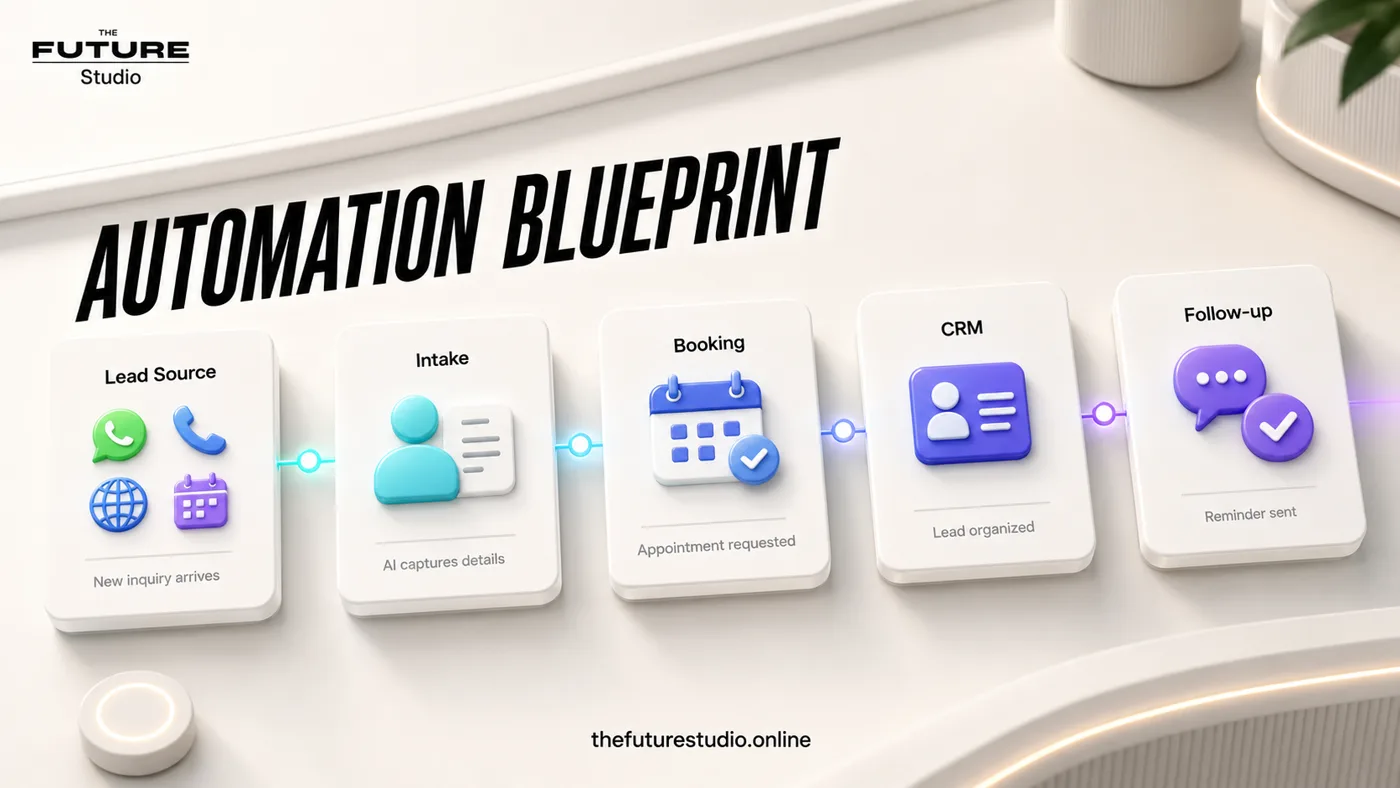
Turn chats into pipeline
Use WhatsApp to qualify, route and follow up leads without losing human control.
Use case
Who the workflow is for
WhatsApp Sales Automation is written for teams that sell through WhatsApp and need faster qualification without hiding the human sales path. The workflow addresses a specific operating problem.
WhatsApp sales automation works when it supports a clear sales process. In practice, the issue is that leads ask questions at different times, sales reps respond inconsistently, and good opportunities disappear before they are qualified. That is why the content focuses on the working process, not generic AI claims.
Data
What the workflow should capture
The first system should capture product or service interest, budget range, urgency, location, decision stage, preferred next step, and owner. Those details should become a clear next action instead of staying trapped in calls, chats, inboxes, or staff memory.
The workflow also needs an operating trail: who owns the request, what has already been confirmed, what is due next, and what the customer should expect.
Handoff
Where people should stay in control
Human handoff should trigger on negotiation, complex pricing, objections, custom quotes, angry customers, and ready-to-buy leads. The AI should not overtalk or hide the option to reach a person.
This keeps the automation useful without making it reckless. AI handles speed, structure, reminders, and summaries; people keep judgment, trust, and sensitive decisions.
First build
What to build first
The first version should be a short qualification script, CRM update, rep assignment, and one follow-up sequence for quiet leads. A focused scope makes it possible to launch, measure, and improve without overbuilding.
Success should be measured through qualified leads, rep handoffs, booked calls, reply time, and closed-loop follow-up. The workflow should also avoid making the chat feel like a long form before the buyer gets value, because a fast automation that damages the customer experience is not a win.
Example workflow
How this works in a real business
In daily operation, the value comes from turning an incomplete message into an action. For this topic, the system should organize product or service interest, budget range, urgency, location, decision stage, preferred next step, and owner and expose the next step.
People step in when there is negotiation, complex pricing, objections, custom quotes, angry customers, and ready-to-buy leads. The AI does not try to finish every conversation; it prepares a reviewable handoff.
The initial build should be a short qualification script, CRM update, rep assignment, and one follow-up sequence for quiet leads. That keeps the project measurable and prevents the page or system from becoming generic.
FAQ
Common questions
Who is whatsapp sales automation for?
It is for teams that sell through WhatsApp and need faster qualification without hiding the human sales path.
What should the first workflow collect?
It should start by capturing product or service interest, budget range, urgency, location, decision stage, preferred next step, and owner.
When should a person take over?
A person should take over when the conversation involves negotiation, complex pricing, objections, custom quotes, angry customers, and ready-to-buy leads.
How should success be measured?
Measure qualified leads, rep handoffs, booked calls, reply time, and closed-loop follow-up, not just how many automated messages were sent.
What makes this workflow useful?
It solves a defined operating problem, collects the details the team needs, and produces a clear next action.
Related pages
Explore the related cluster
Next step
Map the first workflow that needs to work
Book a free AI systems demo with The Future Studio. We will map the workflow, the boundaries, and the smallest useful system to build first.