automation consulting
AI Automation Consultant
AI Automation Consultant should solve one concrete problem: the business knows AI could help but does not know which process to automate first or which tools are worth connecting. It is designed for owners and operators who need an expert to turn messy workflows into an automation plan, with clear rules for what the workflow captures, when people take over, and how success is measured.
Recommended path
Connect this need to the right system
Compare the related workflows, services, and examples to choose the most useful next step.
Worked example
Map one automation before buying
Illustrative workflow to review with your team; not a client result.
From request to action
- TriggerA repeated task is consuming staff time.
- Required informationWrite down its trigger, required inputs, source of truth, human decision, expected output and current owner.
- Rule and ownerMark the decisions that need judgment. Choose a first test with an observable completion state and a person who will check the output.
Example record
Worksheet: trigger → input → approval → action → owner → measure. Example measure: requests with an assigned next action.
An estimate becomes evidence only after the same process is measured before and after.
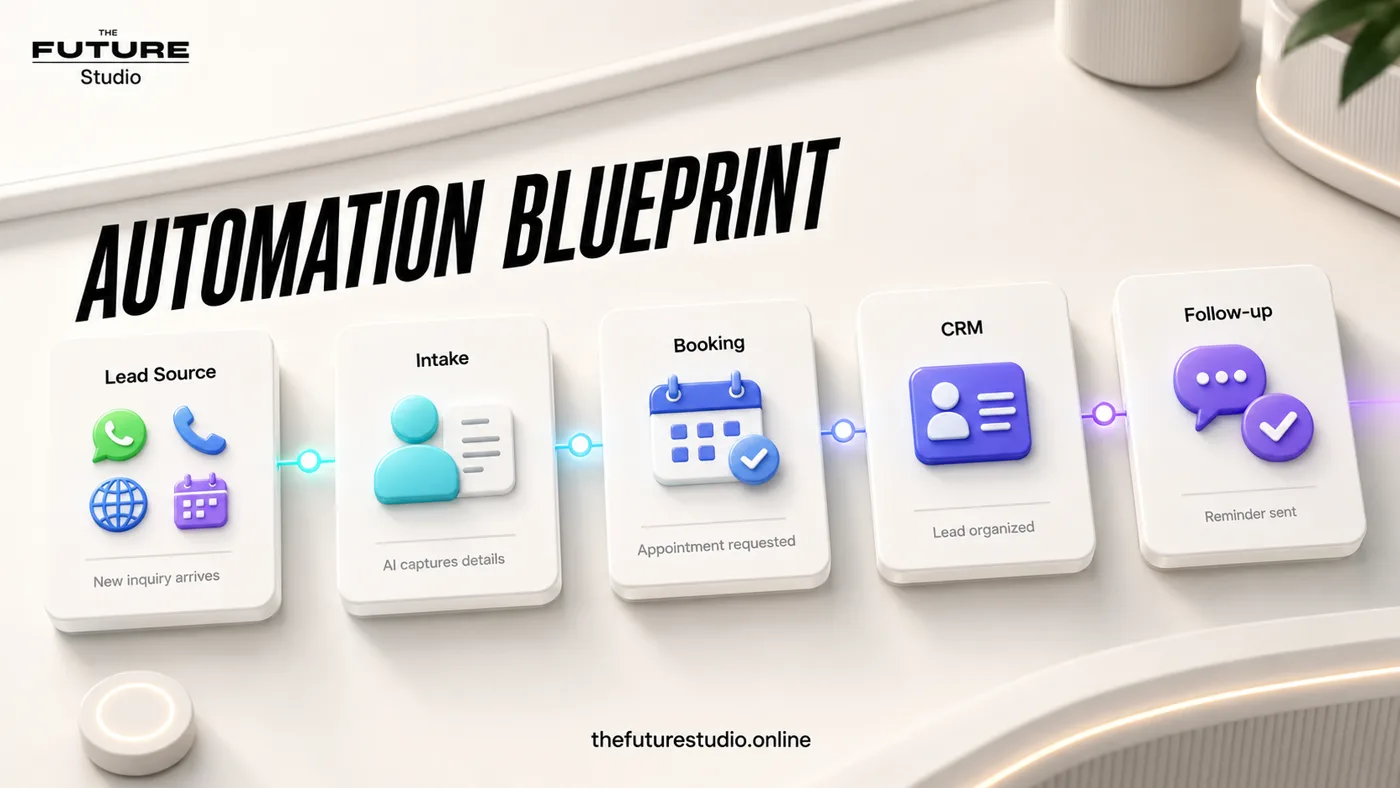
Strategy before tools
Turn messy operations into a practical automation roadmap.
Use case
Who the workflow is for
AI Automation Consultant is written for owners and operators who need an expert to turn messy workflows into an automation plan. The workflow addresses a specific operating problem.
A consultant should clarify the workflow before recommending platforms. In practice, the issue is that the business knows AI could help but does not know which process to automate first or which tools are worth connecting. That is why the content focuses on the working process, not generic AI claims.
Data
What the workflow should capture
The first system should capture current workflow, manual steps, tool stack, decision rules, data sources, team constraints, and expected outcome. Those details should become a clear next action instead of staying trapped in calls, chats, inboxes, or staff memory.
The workflow also needs an operating trail: who owns the request, what has already been confirmed, what is due next, and what the customer should expect.
Handoff
Where people should stay in control
Human handoff should trigger on strategy choices, brand voice, customer promises, compliance questions, and anything that needs owner approval. The best work separates what should be automated from what should stay human.
This keeps the automation useful without making it reckless. AI handles speed, structure, reminders, and summaries; people keep judgment, trust, and sensitive decisions.
First build
What to build first
The first version should be an audit, a workflow map, a ranked automation backlog, and one small implementation. A focused scope makes it possible to launch, measure, and improve without overbuilding.
Success should be measured through time saved, error reduction, lead response speed, booking conversion, and adoption by staff. The workflow should also avoid starting with software selection instead of workflow clarity, because a fast automation that damages the customer experience is not a win.
Example workflow
How this works in a real business
A practical version starts when a real inquiry arrives on the main channel. The system recognizes the request as relevant for owners and operators who need an expert to turn messy workflows into an automation plan and asks only for current workflow, manual steps, tool stack, decision rules, data sources, team constraints, and expected outcome.
When the conversation contains strategy choices, brand voice, customer promises, compliance questions, and anything that needs owner approval, the automated path stops. The system prepares the context, labels the reason for handoff, and alerts the right owner.
The first release stays narrow: an audit, a workflow map, a ranked automation backlog, and one small implementation. That gives the business proof before adding heavier CRM logic, reports, or more channels.
FAQ
Common questions
Who is ai automation consultant for?
It is for owners and operators who need an expert to turn messy workflows into an automation plan.
What should the first workflow collect?
It should start by capturing current workflow, manual steps, tool stack, decision rules, data sources, team constraints, and expected outcome.
When should a person take over?
A person should take over when the conversation involves strategy choices, brand voice, customer promises, compliance questions, and anything that needs owner approval.
How should success be measured?
Measure time saved, error reduction, lead response speed, booking conversion, and adoption by staff, not just how many automated messages were sent.
What makes this workflow useful?
It solves a defined operating problem, collects the details the team needs, and produces a clear next action.
Related pages
Explore the related cluster
Next step
Map the first workflow that needs to work
Book a free AI systems demo with The Future Studio. We will map the workflow, the boundaries, and the smallest useful system to build first.