small business automation
AI Automation for Small Business
AI Automation for Small Business should solve one concrete problem: owners and small teams handle sales, admin, support, and follow-up manually, so the same tasks repeat every day. It is designed for small businesses that need automation to protect leads and time without adding complexity, with clear rules for what the workflow captures, when people take over, and how success is measured.
Recommended path
Connect this need to the right system
Compare the related workflows, services, and examples to choose the most useful next step.
Worked example
Three useful starting points for a small team
Illustrative workflow to review with your team; not a client result.
From request to action
- TriggerYou can only improve one repeated task first.
- Required informationFor appointments, count unconfirmed requests. For field services, count incomplete job briefs. For quotation work, count estimates with no assigned follow-up.
- Rule and ownerPick the task with a clear owner, repeatable inputs and a measurable manual burden. Capture a baseline before selecting a platform.
Example record
First-workflow note: repeated task; weekly volume; staff minutes; missing information; responsible person; first test.
Start with a manageable task; a software subscription alone does not establish a working process.
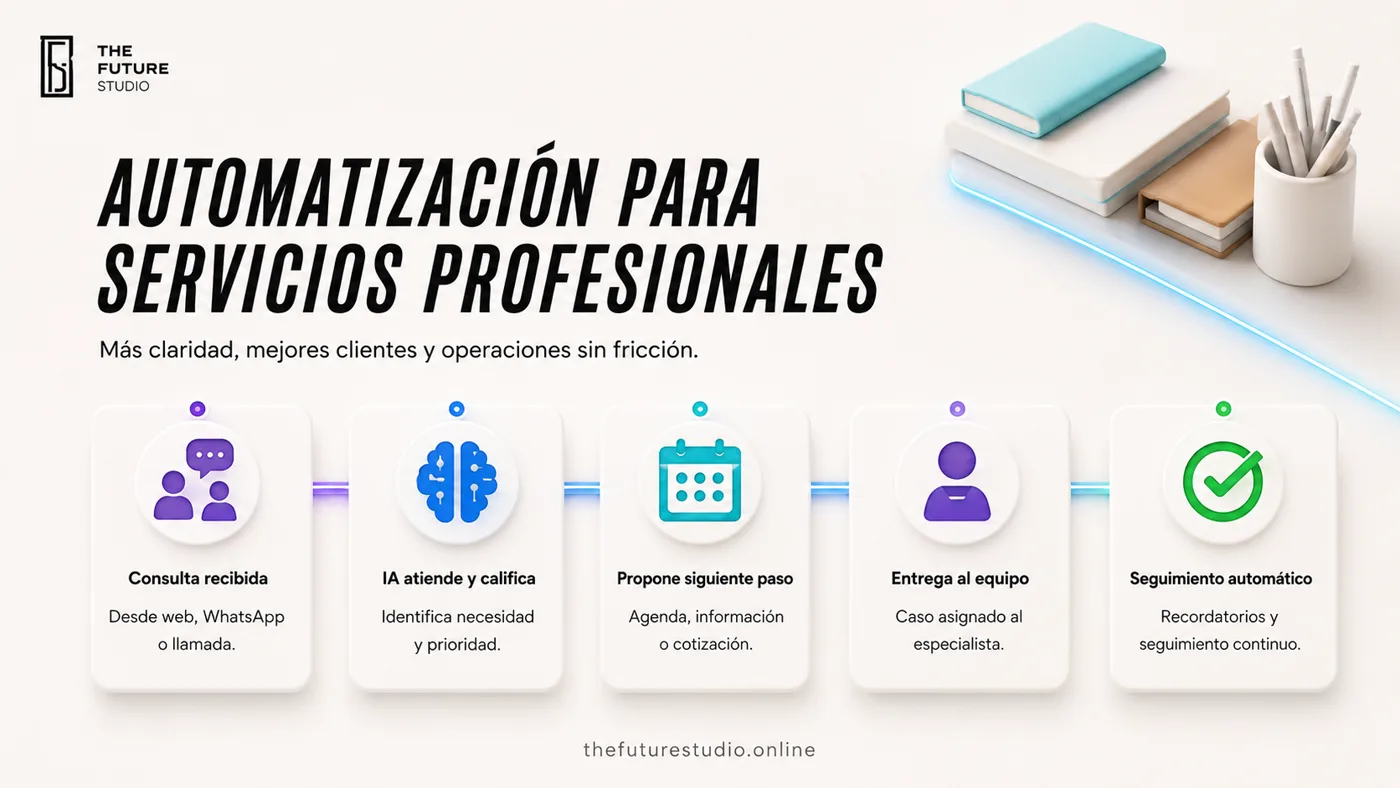
Start with one useful workflow
Automate the work that protects leads, appointments and follow-up.
Use case
Who the workflow is for
AI Automation for Small Business is written for small businesses that need automation to protect leads and time without adding complexity. The workflow addresses a specific operating problem.
Small businesses do not need a huge AI transformation to get value. In practice, the issue is that owners and small teams handle sales, admin, support, and follow-up manually, so the same tasks repeat every day. That is why the content focuses on the working process, not generic AI claims.
Data
What the workflow should capture
The first system should capture inquiry source, customer need, booking or quote path, owner, next action, and follow-up date. Those details should become a clear next action instead of staying trapped in calls, chats, inboxes, or staff memory.
The workflow also needs an operating trail: who owns the request, what has already been confirmed, what is due next, and what the customer should expect.
Handoff
Where people should stay in control
Human handoff should trigger on custom quotes, complaints, refunds, sensitive customer details, and any decision that affects the relationship. They need one workflow that saves time or captures revenue.
This keeps the automation useful without making it reckless. AI handles speed, structure, reminders, and summaries; people keep judgment, trust, and sensitive decisions.
First build
What to build first
The first version should be one workflow that is already happening every week: lead capture, appointment booking, quote follow-up, or customer reminders. A focused scope makes it possible to launch, measure, and improve without overbuilding.
Success should be measured through missed leads, response time, booked appointments, follow-up completion, and hours saved. The workflow should also avoid building a large automation system before the first workflow proves value, because a fast automation that damages the customer experience is not a win.
Example workflow
How this works in a real business
In daily operation, the value comes from turning an incomplete message into an action. For this topic, the system should organize inquiry source, customer need, booking or quote path, owner, next action, and follow-up date and expose the next step.
People step in when there is custom quotes, complaints, refunds, sensitive customer details, and any decision that affects the relationship. The AI does not try to finish every conversation; it prepares a reviewable handoff.
The initial build should be one workflow that is already happening every week: lead capture, appointment booking, quote follow-up, or customer reminders. That keeps the project measurable and prevents the page or system from becoming generic.
FAQ
Common questions
Who is ai automation for small business for?
It is for small businesses that need automation to protect leads and time without adding complexity.
What should the first workflow collect?
It should start by capturing inquiry source, customer need, booking or quote path, owner, next action, and follow-up date.
When should a person take over?
A person should take over when the conversation involves custom quotes, complaints, refunds, sensitive customer details, and any decision that affects the relationship.
How should success be measured?
Measure missed leads, response time, booked appointments, follow-up completion, and hours saved, not just how many automated messages were sent.
What makes this workflow useful?
It solves a defined operating problem, collects the details the team needs, and produces a clear next action.
Related pages
Explore the related cluster
Next step
Map the first workflow that needs to work
Book a free AI systems demo with The Future Studio. We will map the workflow, the boundaries, and the smallest useful system to build first.